
Energy decisions increasingly shape household comfort, expenses, and resilience in ways that were once easy to ignore. Daily routines now depend on a constant flow of electricity, from work and entertainment to cooking and climate control. At the same time, rising utility costs and occasional outages introduce uncertainty into what used to feel predictable. Thoughtful home energy planning provides a practical response, allowing homeowners to balance reliability, efficiency, and long-term value. Instead of reacting to problems as they arise, a structured approach makes it possible to anticipate needs and avoid costly missteps. In this article, a clear step-by-step framework explains how to evaluate usage, prepare for future changes, and select solutions that fit real-world living.

Step 1: Understand Your Current Usage
Review Past Year’s Electric Bills
Electric bills offer far more insight than simple monthly totals might suggest. A full year of statements reveals seasonal patterns, highlighting how heating and cooling cycles influence consumption. Sudden spikes often correspond to lifestyle changes, equipment additions, or extreme temperatures. By examining these fluctuations, homeowners gain a realistic baseline for planning rather than relying on estimates. This historical view also clarifies how pricing structures, including peak rates, affect overall costs. Without such context, system sizing decisions risk being either insufficient or unnecessarily expensive.
Identify Peak Usage Times and High-Draw Appliances
Energy usage rarely remains consistent throughout a typical day. Morning routines, evening activities, and temperature shifts can all drive predictable demand surges. Appliances such as air conditioners, ovens, and dryers often contribute disproportionately to these peaks. Identifying when and why these spikes occur helps determine which loads deserve priority in any backup strategy. This knowledge becomes particularly valuable when evaluating storage capacity and circuit management options. Accurate awareness prevents overgeneralization and supports more precise system design.
Step 2: Anticipate Future Changes
Household energy needs evolve over time, sometimes gradually and sometimes unexpectedly. Remote work arrangements, new family members, or additional electronics can alter daily consumption. Electric vehicles, home renovations, or upgraded HVAC systems introduce even more significant changes. Planning solely around current usage may therefore create limitations within a few years. Considering foreseeable adjustments encourages investments that remain useful rather than quickly become outdated. Flexibility becomes a defining principle, particularly for systems intended to serve long-term roles.
Step 3: List Must-Run Devices During Outages
Power interruptions expose which devices truly matter for safety and comfort. Refrigeration preserves food, internet connectivity supports communication, and medical equipment may be critical. Lighting, charging, and basic climate control also rank high for most households. Listing these priorities transforms backup power from an abstract concept into a concrete requirement. This process clarifies the difference between essential circuits and optional conveniences. As a result, storage and output expectations can be defined with far greater accuracy.
Step 4: Evaluate Your Solar Potential
Roof Orientation, Shading, and Available Space
Solar performance depends heavily on physical placement and environmental conditions. Roof surfaces facing optimal directions typically capture more consistent sunlight throughout the day. Shading from trees, nearby buildings, or structural features can significantly reduce production. Available installation space determines not only capacity but also future expansion possibilities. Even modest obstructions may influence financial returns and system effectiveness. Careful site evaluation therefore serves as a technical necessity rather than a cosmetic consideration.
Average Daily Sunlight in Your Area
Geographic location plays a decisive role in renewable generation potential. Regions vary widely in average daily sunlight, seasonal variability, and weather stability. These factors influence how much energy panels can realistically produce over time. Reliable estimates help align expectations with achievable results instead of theoretical maximums. Understanding local solar conditions also informs storage sizing and backup planning. Accurate projections reduce uncertainty and support balanced decision-making.
Step 5: Choose Your Path
Solar Panels First, Battery Later
Some homeowners prefer a phased approach to energy upgrades. Installing solar panels first reduces grid dependence and may deliver immediate bill savings. Battery storage can then be added once consumption patterns and production levels are better understood. This strategy spreads costs over time and allows incremental adaptation. However, later integration may introduce compatibility or installation complexities. Evaluating these trade-offs helps determine whether gradual expansion or comprehensive deployment makes greater sense.
Solar + Battery Together from the Start
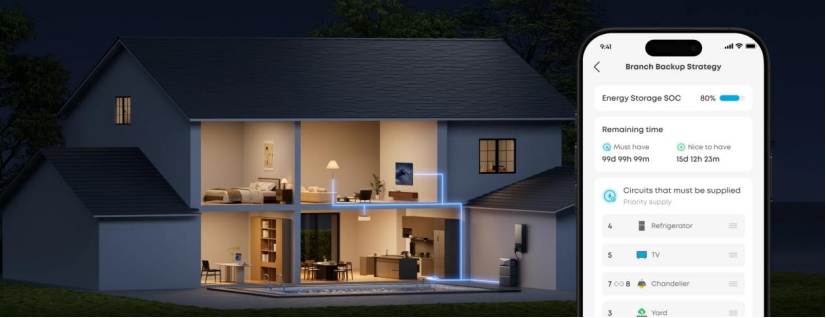
Integrating generation and storage simultaneously often simplifies both design and performance optimization. A coordinated system can immediately capture excess daytime production and reserve it for later use, forming a cohesive solar battery backup strategy. The Anker SOLIX E10 home battery backup exemplifies this approach by combining a battery, solar panels, and a generator to ensure continuous home power. Solutions such as this illustrate the integrated model, supporting demanding household loads with strong output capabilities, including a 10 kW turbo mode suited for high-demand scenarios. Combining components from the outset can also reduce retrofitting challenges and streamline circuit prioritization. The result is a unified energy ecosystem rather than separate, loosely connected upgrades.
Step 6: Calculate Costs and Savings
Financial evaluation extends beyond initial purchase or installation expenses. Long-term savings may arise from reduced peak-rate consumption, improved self-consumption, and avoided outage losses. Maintenance expectations and equipment lifespan also influence overall value. Accurate modeling requires realistic assumptions rather than overly optimistic projections. Comparing multiple scenarios helps clarify which configuration aligns best with household priorities. Balanced analysis supports decisions grounded in both economics and practicality.
Step 7: Work With Trusted Installers
Professional guidance plays a central role in translating plans into functional systems. Experienced installers evaluate site conditions, electrical infrastructure, and safety requirements. Proper installation directly affects performance, reliability, and regulatory compliance. Collaboration also ensures that circuit prioritization and system behavior match household expectations. Clear communication reduces the likelihood of misunderstandings or misconfigurations. Trustworthy expertise ultimately protects both investment and daily convenience.
Conclusion
Effective home energy planning combines technical awareness, lifestyle considerations, and financial reasoning into a coherent strategy. Understanding usage patterns, anticipating future needs, and defining outage priorities form the foundation of informed decisions. Solar evaluation and system integration choices further shape long-term outcomes. Storage technologies increasingly serve roles that extend beyond emergencies, influencing daily efficiency and resilience. As households grow more dependent on reliable electricity, structured planning becomes both practical and necessary. Thoughtful preparation transforms energy systems into stable, adaptable assets that support modern living.